The Big Five
Africa's Most Iconic Wildlife
The term "Big Five" was coined by big-game hunters, referring to the five most difficult and dangerous animals to hunt on foot in Africa. Today, they represent the most sought-after sightings on safari, embodying the wild spirit of Kruger National Park.
Why Are They Called the "Big Five"?
Originally, the term referred to the five most dangerous and challenging animals for hunters to track and kill on foot. Today, the Big Five represent conservation priorities and the most exciting wildlife viewing opportunities in Africa.
Kruger National Park is one of the best places in the world to see all Big Five in their natural habitat. Our expert guides know the best locations and times to maximize your chances of encountering these magnificent creatures while ensuring your safety and their conservation.
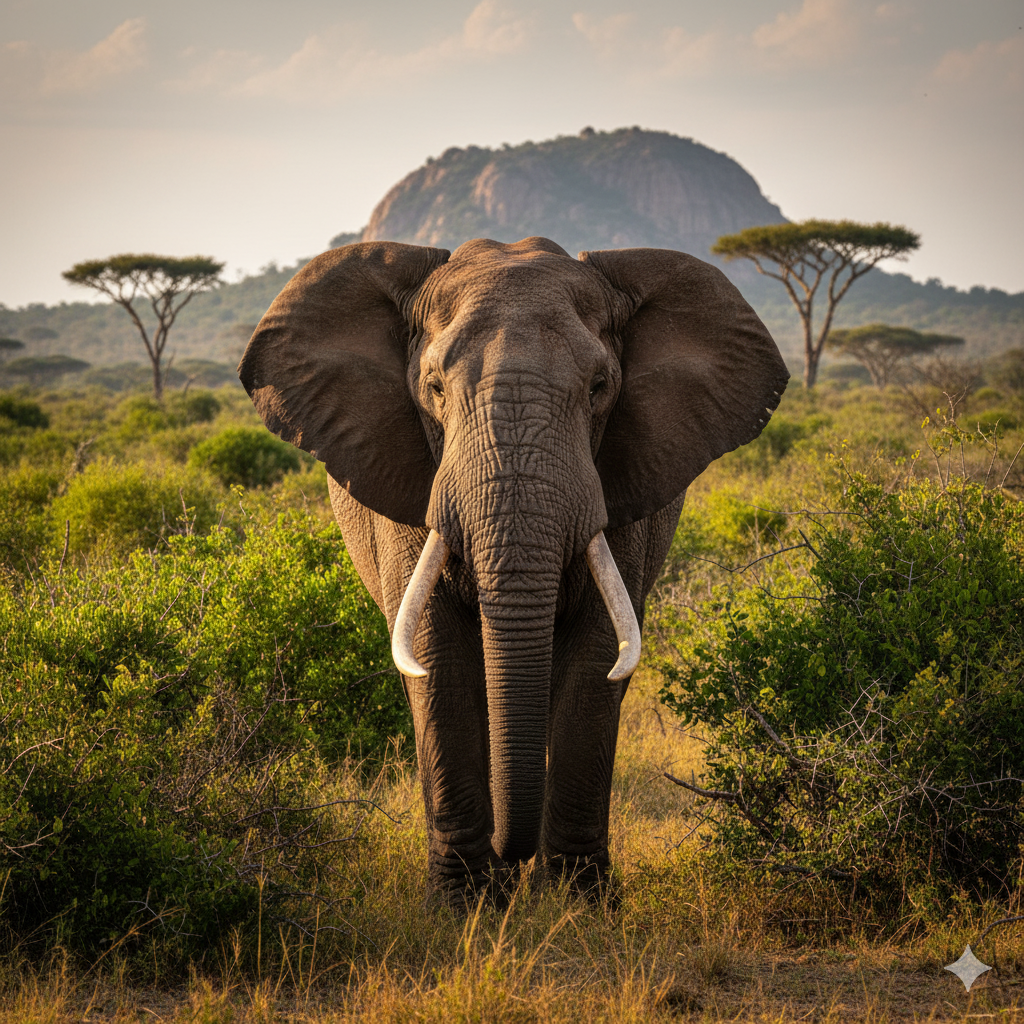
African Elephant
Loxodonta africana
The African elephant is the largest living terrestrial animal and one of the most intelligent species on Earth. These magnificent creatures are known for their complex social structures, exceptional memory, and remarkable problem-solving abilities. Family herds are led by a matriarch, typically the oldest and most experienced female.
Physical Characteristics
Up to 3.2m tall at shoulder, weighing 4,000-6,000kg
Habitat
Throughout Kruger, particularly near water sources, woodlands, and savanna grasslands. Most commonly found in the southern and central regions.
Behavior & Social Structure
Highly social animals living in matriarchal herds. Communicate through infrasonic sounds, body language, and touch. Show empathy, grief, and self-awareness.
Fascinating Facts
- •Can consume up to 150kg of vegetation daily
- •Communicate through infrasonic sounds inaudible to humans
- •Tusks continue growing throughout their lifetime
- •Have been observed mourning their dead
Best Spotting Opportunities
Near waterholes during dry season, early morning and late afternoon
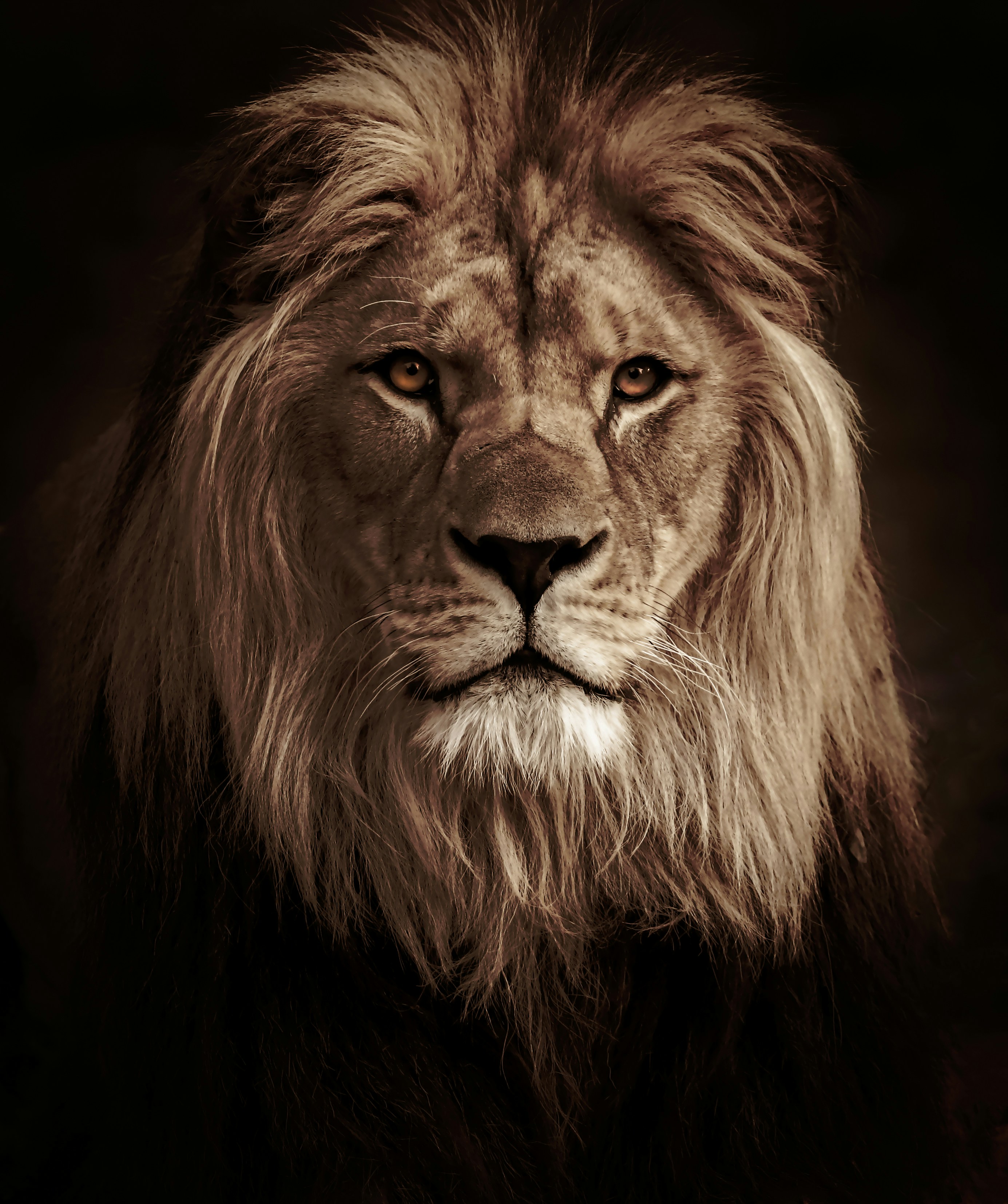
African Lion
Panthera leo
Known as the 'King of the Savanna,' lions are Africa's apex predators and the only social big cats. They live in prides consisting of related females, their cubs, and a small number of adult males. Lions are powerful hunters with exceptional teamwork skills, making them one of nature's most formidable predators.
Physical Characteristics
Males: 180-225kg, Females: 120-150kg. Males stand up to 1.2m at shoulder
Habitat
Open grasslands, woodlands, and thornveld throughout Kruger. Prefer areas with good prey density and adequate cover.
Behavior & Social Structure
Live in prides of up to 30 individuals. Females do most of the hunting while males defend territory. Most active at night and during cooler hours.
Fascinating Facts
- •Roar can be heard up to 8km away
- •Sleep up to 20 hours per day to conserve energy
- •Males' manes darken with age and testosterone levels
- •Females are the primary hunters of the pride
Best Spotting Opportunities
Early morning and late afternoon, especially near rivers and waterholes
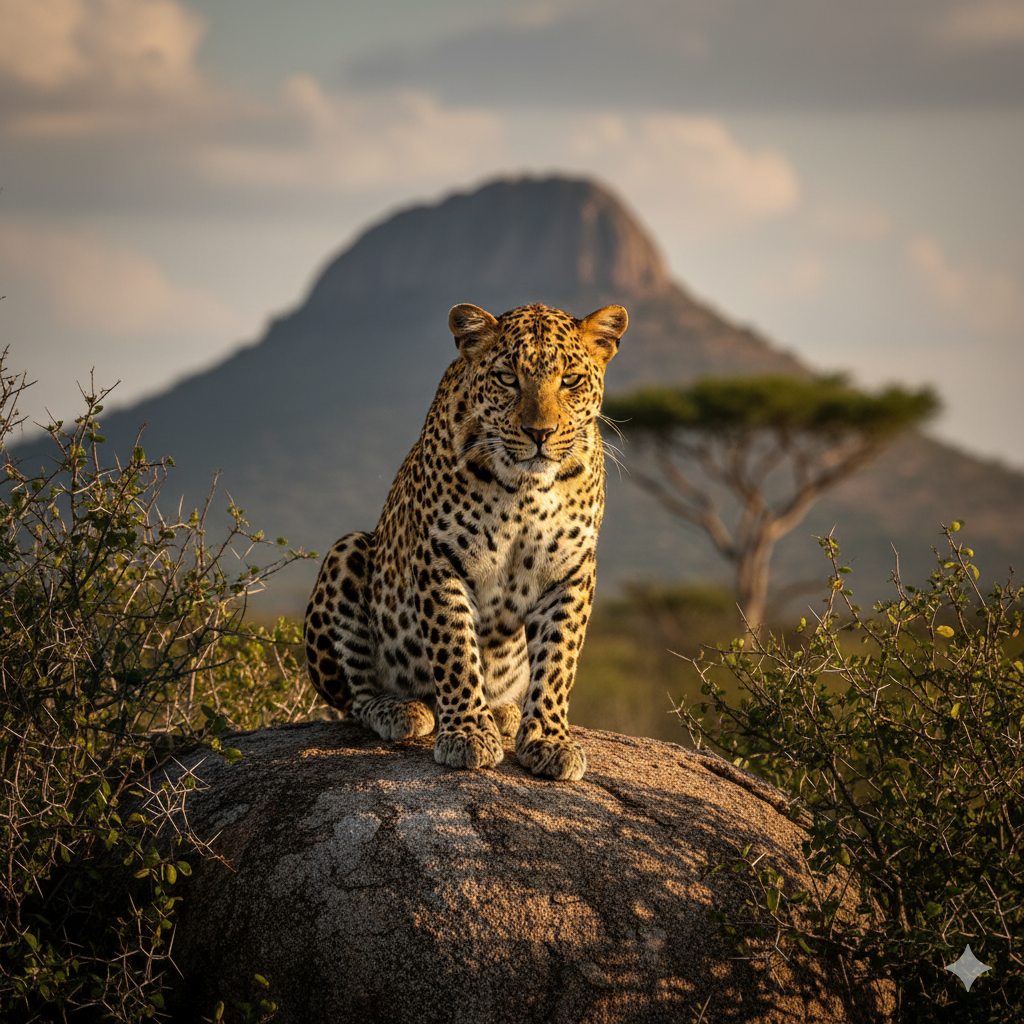
African Leopard
Panthera pardus
The most elusive and mysterious of the Big Five, leopards are solitary, powerful hunters with incredible strength relative to their size. Their distinctive rosette-patterned coats provide perfect camouflage. Leopards are exceptional climbers and are famous for storing their kills in trees to protect them from scavengers.
Physical Characteristics
Males: 60-70kg, Females: 35-40kg. Length up to 2.1m including tail
Habitat
Rocky outcrops (kopjes), riverine forests, and dense woodlands. Found throughout Kruger but prefer areas with good cover.
Behavior & Social Structure
Solitary and nocturnal. Excellent climbers that store prey in trees. Extremely territorial and stealthy hunters with exceptional night vision.
Fascinating Facts
- •Can carry prey twice their body weight up a tree
- •Have the largest distribution of all wild cats
- •Each leopard's rosette pattern is unique like fingerprints
- •Can survive without drinking water for extended periods
Best Spotting Opportunities
Dawn and dusk along rivers and near rocky outcrops. Notoriously difficult to spot
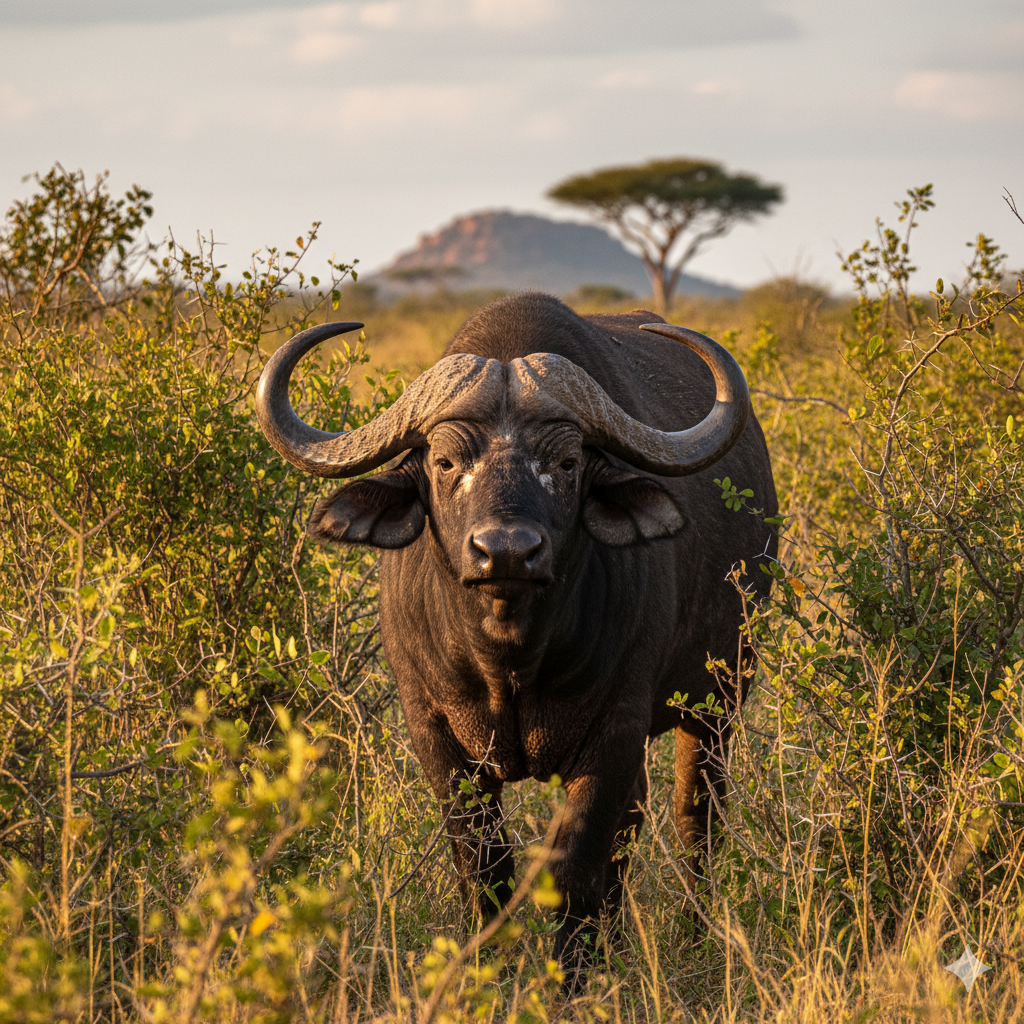
African Buffalo
Syncerus caffer
Often considered the most dangerous of the Big Five to humans, African buffalo are massive, unpredictable animals with formidable strength and sharp horns. They have never been successfully domesticated. Buffalo are known for their protective herd behavior and have been observed rescuing herd members from predators.
Physical Characteristics
Males: 750-900kg, Females: 600-750kg. Stand up to 1.7m at shoulder
Habitat
Open woodlands, grasslands, and areas near permanent water sources. Need to drink daily.
Behavior & Social Structure
Live in large herds of up to 1,000 individuals. Strong herd mentality with cooperative defense. Males form bachelor groups outside breeding season.
Fascinating Facts
- •Never successfully domesticated due to unpredictable nature
- •Have excellent memory and reportedly hold grudges
- •Both males and females have horns that fuse at the base
- •Can be extremely dangerous when wounded or cornered
Best Spotting Opportunities
Near water sources throughout the day, particularly in the central and northern regions
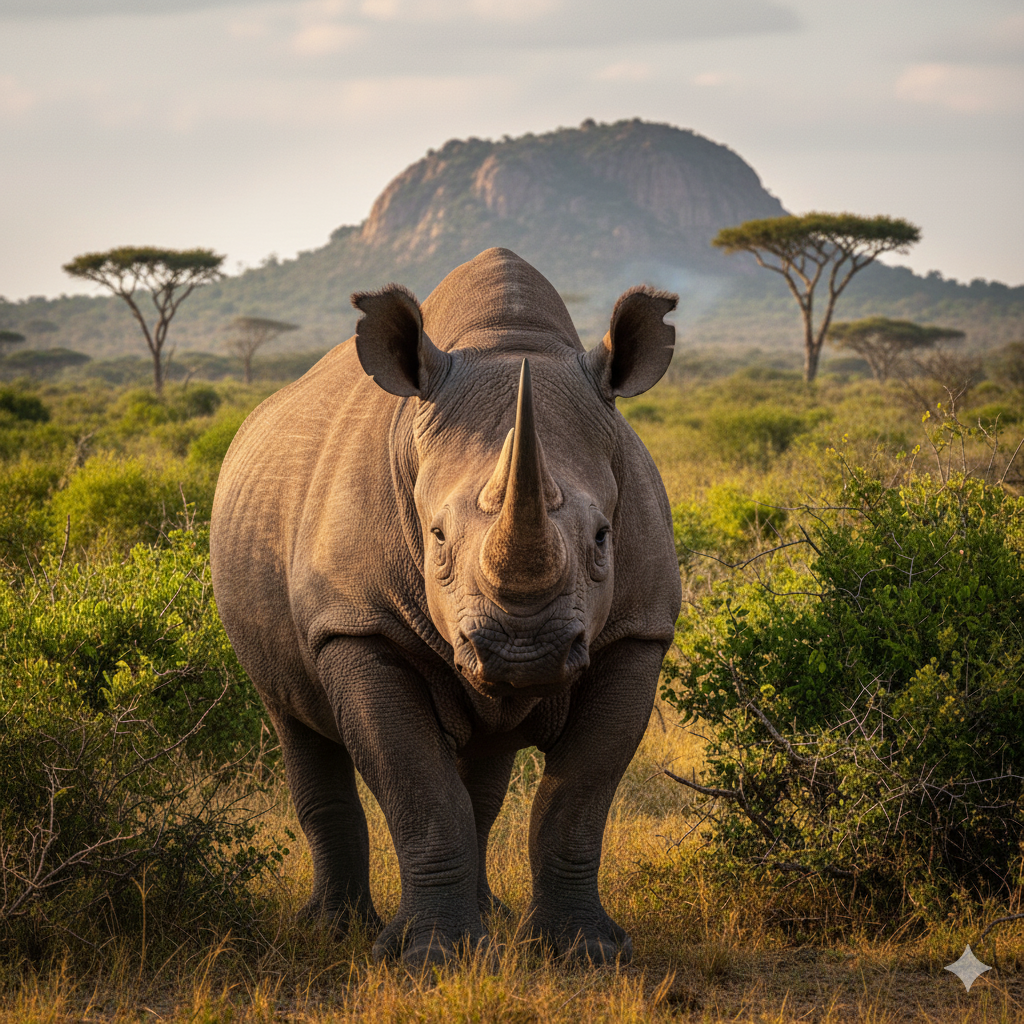
Rhinoceros (Black & White)
Diceros bicornis & Ceratotherium simum
Kruger is home to both black and white rhinoceros species, with the white rhino being significantly larger. Despite their names, both species are gray; the 'white' is believed to derive from the Afrikaans 'wyd' (wide), referring to their wide, square lips. Both species are critically endangered due to poaching for their horns.
Physical Characteristics
White: 1,800-2,500kg, Black: 900-1,400kg
Habitat
White rhinos prefer open grasslands and savannas. Black rhinos favor dense bushland and thickets. Both need water daily.
Behavior & Social Structure
White rhinos are more social; black rhinos are solitary and more aggressive. Both have poor eyesight but excellent hearing and smell.
Fascinating Facts
- •Difference is in lip shape: white rhinos have square lips for grazing, black rhinos have pointed lips for browsing
- •White rhino is the world's second-largest land mammal
- •Can run up to 50km/h despite their size
- •Intensive anti-poaching efforts have been crucial to their survival
Best Spotting Opportunities
White rhinos in open grasslands in southern regions; black rhinos much rarer and harder to spot
Big Five Safari Tips
Best Times
- • Early morning (5:30 AM - 8:00 AM) - Animals most active
- • Late afternoon (4:00 PM - 6:30 PM) - Predators begin hunting
- • Dry season (May - September) - Animals congregate at water sources
- • Overcast days - Animals more active throughout the day
Best Locations
- • Satara region - Excellent for lions and elephants
- • Lower Sabie area - High density of all Big Five
- • Crocodile Bridge - Great for rhinos and buffalo
- • Pafuri region - Leopard and elephant sightings
Photography & Safety Tips
Photography Tips:
- • Use a telephoto lens (200-400mm) for safe distance shots
- • Shoot during golden hours for best lighting
- • Be patient - the best shots come to those who wait
- • Focus on eyes for compelling wildlife portraits
Safety Guidelines:
- • Always stay in your vehicle unless in designated areas
- • Maintain a safe distance (at least 50m from Big Five)
- • Never feed or attempt to attract animals
- • Follow your guide's instructions at all times
- • Keep noise levels low to avoid disturbing wildlife
Ready to See the Big Five?
Join us on an unforgettable safari experience in Kruger National Park. Our expert guides will maximize your chances of encountering all five of these magnificent creatures in their natural habitat.